Denmark Taps Cold North Sea Water to Power Esbjerg District Heating
Industrial electric heat pumps in Esbjerg extracted 55.2 MW of thermal energy from 3.3°C North Sea water during a two-hour winter operational test.
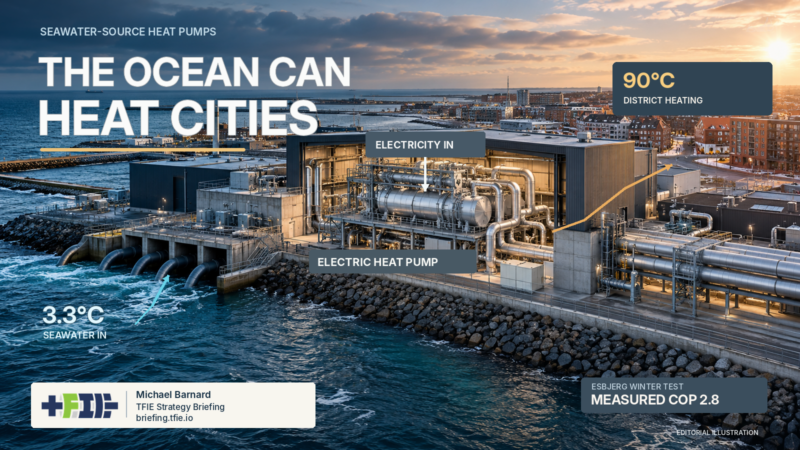
ESBJERG, Denmark — Municipal energy operators in the Danish port city of Esbjerg are deploying industrial-scale electric heat pumps to extract thermal energy from the frigid waters of the North Sea and supply the local district-heating network, according to operational reporting from CleanTechnica. Demonstrating the viability of marine heat extraction even during peak cold-weather conditions, the coastal facility successfully drew heat from near-freezing seawater during a documented two-hour winter performance test, converting electrical input into more than double the amount of usable thermal output for residential and commercial distribution.
The operational milestone in Esbjerg carries significant implications for European utilities, municipal infrastructure planners, and industrial heat equipment manufacturers seeking to decarbonize urban heating networks. Heating accounts for a substantial share of European energy consumption, and coastal municipalities across northern latitudes have historically relied on coal, natural gas, or biomass combustion to maintain district thermal grids through the winter months. By proving that large electric heat pumps can operate with high thermodynamic efficiency when intake water temperatures hover just above freezing, the Esbjerg installation establishes a replicable technical blueprint for electrifying municipal heat networks using ambient marine reservoirs.
Thermal Extraction Mechanics and Coastal Context
District heating systems distribute thermal energy generated at centralized facilities through a network of insulated pipes to supply space heating and hot water to urban buildings. Transitioning these centralized networks away from fossil fuels requires reliable, high-capacity heat sources that remain accessible when ambient air temperatures drop below zero. While ambient air-source heat pumps experience steep efficiency declines during severe winter cold snaps, large bodies of water such as the North Sea retain sufficient thermal mass to serve as a stable heat source throughout the heating season.
In Esbjerg, engineers designed the district-heating interface to harvest low-grade thermal energy directly from cold seawater before returning the chilled water to the marine environment. According to data reported by CleanTechnica, the system is engineered to operate within a narrow temperature differential near the freezing point of water, extracting sensible heat without inducing ice buildup across critical heat-exchanger surfaces.
"Esbjerg, Denmark, is using large electric heat pumps to extract heat from the North Sea and supply its district-heating network. During a two-hour winter test, seawater entered the system at 3.3°C and left at 1.2°C. The two heat pumps consumed 19.9 MW of electricity and supplied 55.2 MW of heat."
Operational Metrics and Thermodynamic Performance
The empirical figures recorded during the two-hour winter evaluation highlight the thermodynamic leverage achieved by the twin heat pump units under cold-water conditions. Seawater was drawn into the intake infrastructure at an initial temperature of 3.3 degrees Celsius (37.9 degrees Fahrenheit) and discharged back into the North Sea at 1.2 degrees Celsius (34.2 degrees Fahrenheit), representing a controlled thermal extraction delta of 2.1 degrees Celsius across the system's heat exchangers.
Throughout the two-hour test window, the two electric heat pumps consumed a combined 19.9 megawatts of electrical power while delivering 55.2 megawatts of thermal energy into the Esbjerg district-heating grid. Those operational figures correspond to a system coefficient of performance (COP) of approximately 2.77—meaning that for every megawatt of electricity drawn from the power grid, the facility delivered nearly 2.8 megawatts of heat to municipal consumers, with the remaining 35.3 megawatts of thermal power harvested directly from the 3.3-degree-Celsius North Sea water.
Achieving a 55.2 MW thermal output at a 1.2-degree-Celsius discharge temperature underscores the engineering precision required in cold-seawater heat pump operations. Because fresh water freezes at 0 degrees Celsius and North Sea seawater freezes at approximately minus 1.8 degrees Celsius depending on local salinity, operating with an outlet temperature of 1.2 degrees Celsius leaves a tight thermal margin. Maintaining steady flow rates and uniform heat transfer across the evaporators is essential to prevent localized freezing while maximizing the thermal energy extracted per cubic meter of pumped seawater.
Strategic Outlook for Electrified District Heating
The successful winter operation in Esbjerg provides utilities and infrastructure investors with validated performance benchmarks for large-scale marine heat pumps in cold climates. By coupling 19.9 MW of flexible electrical demand with a 55.2 MW thermal delivery capacity, the facility also positions the municipal heating network to integrate closely with Denmark's wind-heavy electrical grid, converting renewable electricity into stored thermal water capacity within the district network.
Looking ahead, the broader adoption of cold-seawater district heating across northern European ports and coastal cities will depend on grid interconnection capacity, capital expenditure economics for corrosion-resistant marine intake infrastructure, and environmental permitting governing cold-water discharge plumes. As municipal utilities evaluate alternatives to combustion-based heating plants, the Esbjerg winter test demonstrates that seawater at 3.3 degrees Celsius represents a commercially and technically viable energy reservoir for utility-scale heat decarbonization.