NASA Astronauts to Address Florida Students From Orbital Outpost
NASA astronauts Jessica Watkins and Luke Delaney will field STEM inquiries from Florida students during a live orbital broadcast on Nov. 10, 2026.
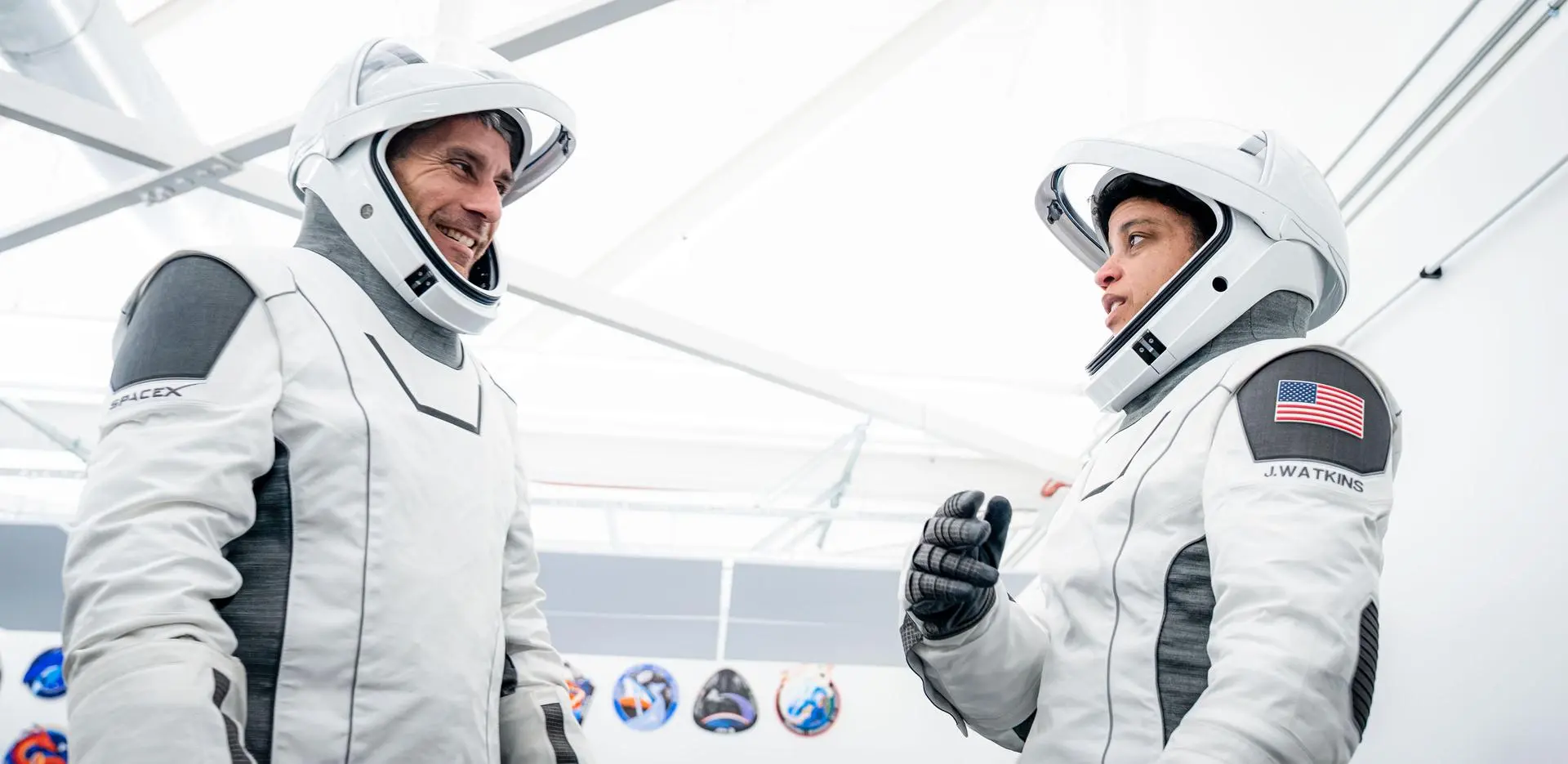
NASA astronauts Jessica Watkins and Luke Delaney will participate in an Earth-to-space educational broadcast from aboard the International Space Station on Tuesday, Nov. 10, responding to prerecorded science, technology, engineering, and mathematics questions submitted by students in Florida. According to an official announcement from NASA News Releases, the live downlink is scheduled to commence at 10:40 a.m. EST and will be streamed publicly via the agency's Learn With NASA YouTube channel. The event is hosted at the local level by Freedom Crossing Academy, serving as a direct communications bridge between orbital crew members and primary and secondary education cohorts on the ground.
While routine educational downlinks represent a longstanding public engagement mandate for the United States space program, these structured broadcasts carry broader strategic significance for the aerospace and defense industrial base. As both government agencies and commercial spaceflight operators expand low-Earth orbit operations and lunar exploration architectures, cultivating a domestic pipeline of technical talent remains a critical operational priority. Direct engagement between active mission specialists and student populations serves as a foundational mechanism to sustain long-term workforce readiness across engineering, orbital mechanics, and life sciences disciplines.
Orbital Communications and Educational Outreach Context
The upcoming broadcast with Freedom Crossing Academy continues NASA's established protocol of utilizing the International Space Station as an orbital classroom and demonstration platform. By integrating prerecorded student inquiries into the crew's daily operational schedule, mission planners balance rigorous microgravity research timelines with public educational directives. Astronauts Watkins and Delaney will address student questions directly from the orbital laboratory, illustrating how theoretical classroom concepts in physics, biology, and mathematics apply to the practical realities of human spaceflight and spacecraft systems management.
Per NASA News Releases, streaming the session on the dedicated Learn With NASA digital platform allows educators and students beyond the immediate Freedom Crossing Academy campus to observe the interaction in real time. This digital distribution model reflects a broader institutional shift toward accessible, web-native science communication, ensuring that telemetry and audiovisual feeds from low-Earth orbit reach a wider demographic without requiring specialized ground reception equipment at participating schools.
Operational Execution and Technical Infrastructure
Conducting a live audiovisual downlink from the International Space Station requires coordinated scheduling across orbital tracking networks and ground control centers. At 10:40 a.m. EST on Nov. 10, high-data-rate communications relays will link the orbital complex with terrestrial distribution nodes to deliver uninterrupted video and audio feeds to the public stream. For the participating astronauts, preparing for and executing these outreach segments demands precise coordination alongside ongoing station maintenance, payload operations, and scientific experiments conducted aboard the microgravity laboratory.
The involvement of Freedom Crossing Academy highlights the continued concentration of aerospace outreach initiatives within Florida, a state that anchors American launch infrastructure and spaceport operations. Connecting students in this region with active crew members reinforces local institutional ties to the space sector, demonstrating the operational continuity between ground-based educational institutions, launch facilities, and crews working in orbit.
Strategic Implications for Workforce Development
Looking ahead, the sustainability of multi-decade space exploration programs depends heavily on consistent student engagement in technical fields. As the International Space Station continues its operational tenure and commercial entities assume a larger role in low-Earth orbit infrastructure, the demand for qualified aerospace engineers, systems integrators, and research scientists is projected to remain elevated. Initiatives that provide students with direct access to astronauts like Jessica Watkins and Luke Delaney serve as a practical touchpoint for converting early academic interest into long-term professional participation in the global space economy.
Following the Nov. 10 broadcast, archived footage on the Learn With NASA channel will remain available as an instructional resource for curriculum integration. Future educational downlinks are expected to follow a similar operational template, leveraging orbital communications architecture to maintain public visibility into human spaceflight missions and technical career pathways.