NASA Opens Applications for Next Deep-Space Astronaut Class
The US space agency launches its latest recruitment cycle to staff lunar surface base operations and prepare for initial crewed expeditions to Mars.
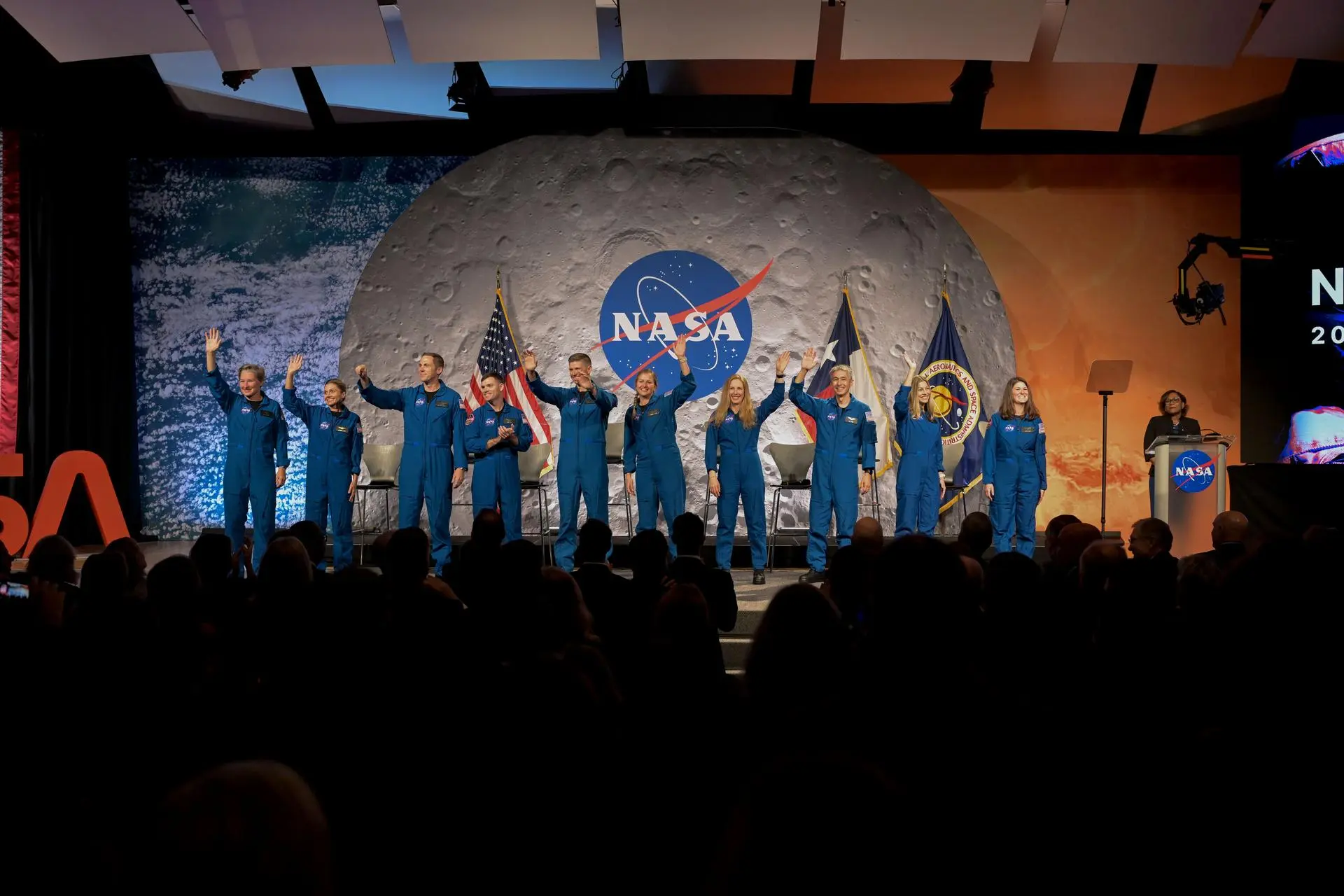
The National Aeronautics and Space Administration has officially opened the application window for its next class of astronaut candidates, initiating a critical human-capital drive to staff upcoming deep-space exploration architectures. According to a formal dispatch from NASA News Releases, the newly recruited cohort will directly support the United States' return to the lunar surface, the construction and operation of a sustained Moon Base, and the foundational engineering and operational preparations required for the first crewed missions to Mars. The recruitment drive marks a decisive shift in how the federal agency structures its flight corps, transitioning from decades of continuous low-Earth orbit rotations aboard the International Space Station toward permanent cislunar habitation and interplanetary transit.
For the global aerospace industrial base and commercial space sector, an active astronaut recruitment cycle serves as a leading indicator of long-term federal mission commitment and procurement stability. Expanding the active astronaut corps requires parallel investments in life-support systems, extra-vehicular activity suits, lunar surface habitats, and commercial human landing systems. Defense and aerospace prime contractors, alongside emerging private spaceflight providers, rely on a steady pipeline of mission-ready flight personnel to validate hardware prototypes, execute integrated systems testing, and staff contracted commercial transport missions across both low-Earth orbit and deep-space trajectories.
Shifting From Orbital Operations to Lunar Infrastructure
The core mandate outlined in the NASA News Releases announcement centers on staffing the agency's multi-phase deep-space exploration roadmap. Unlike previous recruitment cycles that primarily supplied flight engineers for six-month stays in low-Earth orbit, the incoming class of explorers is being selected specifically to write the next chapter of human spaceflight beyond Earth's immediate gravitational neighborhood. Selected candidates will enter an intensive multi-year training regimen designed to qualify them for long-duration surface operations and complex orbital assembly tasks.
"Applications are now open for the agency’s next class of astronauts, who will join NASA as America returns to the Moon, builds the Moon Base, and lays the groundwork for the first crewed missions to Mars."
Establishing a permanent Moon Base alters the skill profile required of modern flight crews. Astronauts assigned to lunar surface infrastructure must operate with greater autonomy from ground control in Houston, manage nuclear or solar surface power grids, conduct geological field surveys in high-radiation environments, and operate pressurized rovers and heavy surface logistics equipment. Furthermore, the explicit inclusion of Moon Base construction in the agency's recruitment call underscores a commitment to sustained surface presence rather than brief, flag-and-footsteps sorties.
Operational Demands and Commercial Aerospace Alignment
From an operational and economic perspective, maintaining an adequately sized astronaut corps is essential to prevent mission bottlenecks as multiple spacecraft platforms enter active service simultaneously. Throughout the coming decade, NASA flight personnel are slated to fly across a diverse fleet of vehicles, including deep-space capsules, lunar landers, and commercial low-Earth orbit destinations that will succeed the retiring International Space Station. Each vehicle architecture demands specialized simulator hours, cockpit familiarization, and mission-specific contingency training.
In addition to flight assignments, active-duty astronauts play an indispensable role on the ground during the hardware development lifecycle. Candidates selected in this recruitment wave will be embedded directly with engineering teams across NASA centers and commercial partner facilities. Their operational feedback governs human-in-the-loop verification, cabin ergonomics, software avionics interfaces, and emergency abort protocols. By expanding the corps now, the agency ensures that human factors engineering keeps pace with hardware fabrication schedules for lunar surface habitats and Mars transit testbeds.
Strategic Outlook and the Path to Mars
Looking ahead, the selection and training timeline for this astronaut class aligns directly with the agency's broader interplanetary objectives. Because astronaut candidates require approximately two years of foundational training—covering spacecraft systems, robotics, spacewalking mechanics, and high-performance jet proficiency—before becoming eligible for flight assignments, recruiting well in advance of hardware deployment is a strategic necessity. Only after completing basic qualification are astronauts assigned to specialized technical duties and eventual mission crews.
The ultimate benchmark for this incoming generation of explorers will be how effectively lunar surface operations translate into readiness for Mars. NASA views the Moon Base as an operational proving ground to validate closed-loop environmental control systems, radiation shielding, autonomous medical care, and surface resource utilization under communication delays. As the selection process moves from initial application screening to final medical and operational evaluations, the composition of this cohort will signal the specific technical disciplines NASA prioritizes for the transition from lunar infrastructure assembly to humanity's first crewed voyages to the Martian surface.