Repsol Advances $1.5 Billion, 500-MW Wind Project in Illinois
Global energy developer Repsol is moving forward with a $1.5 billion, 500-megawatt wind farm in Peoria County, Illinois, despite federal policy shifts.
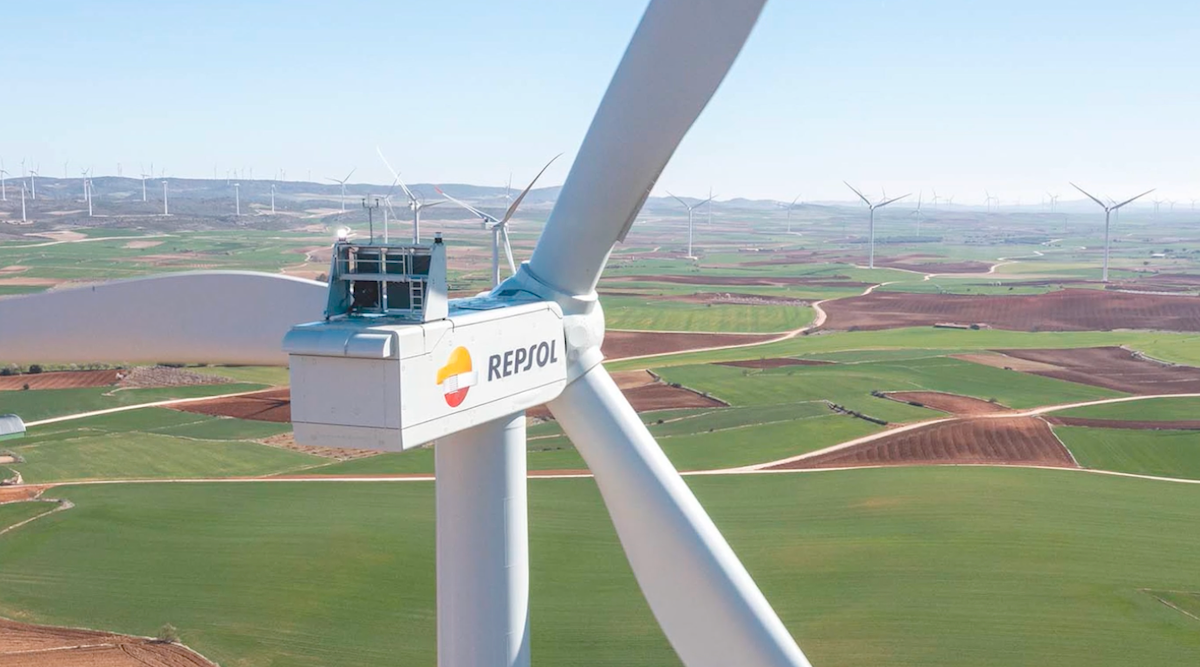
Global energy developer Repsol is advancing plans to construct a $1.5 billion, 500-megawatt wind energy facility in Peoria County, Illinois, according to reporting by CleanTechnica. The utility-scale project remains on track for development despite a sharp reversal in U.S. federal energy policy over the past year and associated legal disputes across the domestic renewable power sector. The investment underscores how state-level regulatory frameworks and corporate capital commitments continue to drive utility-scale wind deployment in the American Midwest.
For global infrastructure investors and power market operators, the progression of a $1.5 billion capital expenditure in central Illinois illustrates the operational decoupling of state and corporate clean energy pipelines from federal policy volatility. Even as Washington has shifted its regulatory posture toward domestic wind generation, multinational energy companies are relying on regional grid demand, state renewable portfolio mandates, and long-term power purchase economics to justify multi-hundred-megawatt generation assets.
Navigating Federal Policy Shifts and Legal Headwinds
The Peoria County wind development comes amid a period of heightened regulatory friction for the U.S. wind industry. Over the past year, federal energy policy underwent a pronounced pivot that introduced permitting scrutiny and legal challenges across several jurisdictions, as documented by CleanTechnica. While offshore and federal-land wind initiatives have faced direct administrative hurdles and litigation, onshore wind projects sited on private agricultural land in states with supportive statutory frameworks have demonstrated greater insulation from federal executive actions.
The global energy developer Repsol is on track to construct a 500-megawatt wind farm in Peoria County, Illinois, regardless of last year's sharp U-turn in federal energy policy.
Illinois has established itself as a primary anchor for Midwest renewable energy investment through state-level legislation that mandates progressive reductions in power-sector carbon emissions and provides structured renewable energy credit mechanisms. By concentrating development within Peoria County, Repsol is positioning the 500-megawatt asset within a jurisdiction where state energy policy and regional transmission interconnections support utility-scale capacity additions independent of federal administrative changes.
Capital Allocation and Grid Capacity Impact
At $1.5 billion in projected capital commitment and 500 megawatts of nameplate generation capacity, the Peoria County facility represents a substantial industrial infrastructure undertaking. A 500-megawatt onshore wind installation typically requires extensive land-lease agreements with local agricultural landowners, multi-year turbine supply contracts, and high-voltage substation upgrades to deliver electricity into the regional transmission network serving Illinois and neighboring Midwestern load centers.
From an economic standpoint, capital deployments of this scale translate into roughly $3,000 per kilowatt of installed capacity, reflecting current supply chain pricing for high-capacity wind turbines, balance-of-plant engineering, and grid interconnection infrastructure. For local municipalities in Peoria County, utility-scale wind installations generate long-term property tax revenues and landowner royalty payments while supplying zero-emission electricity to meet rising commercial and industrial power demand, including data center expansion and manufacturing electrification across the region.
Repsol, an international energy company that has steadily expanded its North American renewable generation portfolio alongside its traditional energy operations, has targeted utility-scale solar and onshore wind projects across key U.S. regional transmission organizations. Advancing a half-gigawatt single-site wind project signals continued institutional confidence in the long-term levelized cost competitiveness of onshore wind power in the U.S. heartland.
Strategic Outlook and Execution Milestones
Looking ahead, the execution of the Peoria County wind farm will depend on finalizing local construction milestones, turbine procurement schedules, and grid interconnection clearances. Industry analysts monitoring the U.S. clean energy transition note that while litigation and federal policy reversals create macroeconomic uncertainty, projects that have already secured land rights, local county approvals, and capital backing are largely proceeding toward commercial operation.
As legal battles over federal energy policy continue to play out in U.S. courts, the trajectory of Repsol's $1.5 billion Illinois wind farm will serve as a benchmark for how international energy developers manage political risk in the United States. Successful completion of the 500-megawatt facility in Peoria County would reinforce the role of Midwestern states as the primary engine for onshore wind capacity growth through the remainder of the decade.